guide7 min read
Edible Cutlery for Cafés and Restaurants: A Practical Guide to Going Plastic-Free
What the single-use plastic rules changed, why the usual swaps disappoint, and how to trial edible cutlery without gambling your service.
If you run a café, a dessert counter, a cloud kitchen or an events business in India, the single-use plastic rules have already changed your buying list. The plastic spoon that came free with every tub of ice cream, the stirrer next to the coffee machine, the straw in every cold brew — those are gone, and the replacements have been a mixed experience at best.
This is a practical guide to one of those replacements: cutlery you can eat. What it is, where it genuinely works in a service environment, where it doesn't, and how to trial it without betting your whole operation on it.
What the single-use plastic rules actually cover
Under the Plastic Waste Management (Amendment) Rules, 2021, India prohibited a specific list of single-use plastic items from 1 July 2022 — the ones with, in the government's phrasing, low utility and high littering potential. For food service, the relevant entries are the everyday ones:
- Plastic cutlery — forks, spoons, knives and trays
- Plastic straws and stirrers
- Plastic plates, cups and glasses
- Polystyrene (thermocol) for decoration
- Wrapping and packing films around sweet boxes and invitation cards
It's a list of items, not a blanket ban on plastic. But it covers precisely the things most food businesses used to hand over without thinking, which is why the scramble for alternatives has been so visible.
Why the usual swaps disappoint
Most operators have already tried at least one of these, and the complaints are consistent.
Paper straws
They work for about four minutes. In a thick shake or a long iced coffee they soften, collapse and leave a papery taste. Customers notice, and they mention it. This is the single most common complaint we hear from café owners.
Wooden and bamboo cutlery
Structurally fine, texturally divisive. The dry, splintery mouthfeel against teeth is genuinely unpleasant for a lot of people, and it's especially poor with cold desserts where the spoon spends real time in the mouth.
Compostable and PLA products
Good intentions, awkward reality. Most need industrial composting to break down in any reasonable timeframe, and that infrastructure isn't available in most Indian cities. In practice a lot of it goes to landfill anyway — you've paid a premium for a different disposal problem.
None of these are scams. They're just solutions that swap one compromise for another, which is why a fourth option is worth understanding.
What edible cutlery actually is
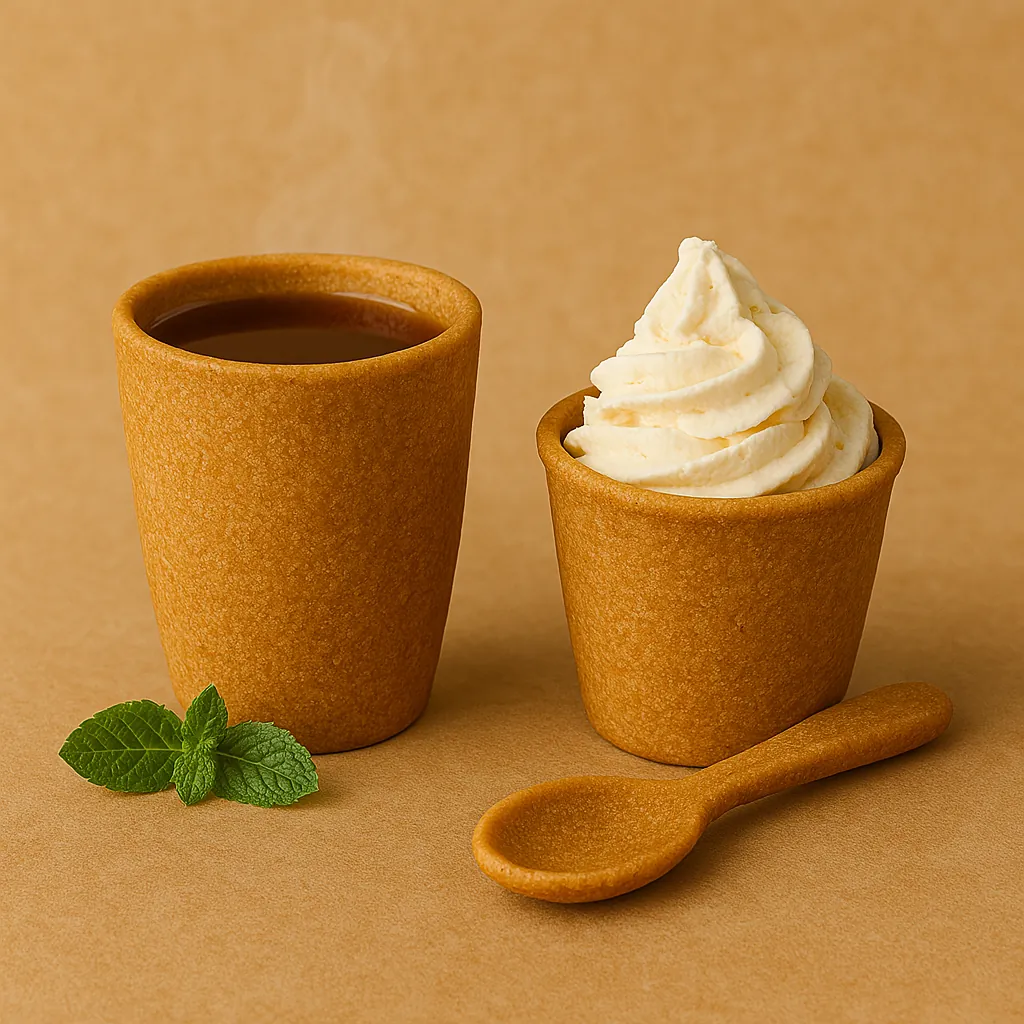
Snaxtic's cutlery is baked from a blend of natural grains and vegetable proteins — no plastic, no artificial preservatives, no chemical coatings. It behaves like cutlery while you use it, and then you have two choices: eat it, or bin it, where it biodegrades in a matter of days rather than centuries.
That second option matters more than it sounds. It means the sustainability claim doesn't depend on customer behaviour. You aren't relying on everyone actually eating the spoon, and you aren't relying on municipal composting existing. Either path ends the same way.
How it holds up in service
This is the part operators care about, so here are the numbers plainly:
- Edible spoons — stay firm for up to 45 minutes in hot and cold dishes
- Edible straws — last up to 45 minutes in liquid without going soggy
- Edible cups — stay crisp for up to 60 minutes with hot and cold drinks
Read those as service windows, not shelf life. Forty-five minutes comfortably covers a dessert eaten in-store, a coffee at a table, or a drink at an event. It does not cover a spoon sitting in a delivery bag for an hour in traffic alongside hot food — so match the item to the occasion rather than swapping everything at once.
Flavour is a choice too: neutral if you don't want it interfering with the dish, or vanilla, chocolate and cinnamon where the cutlery is part of the treat.
Where it fits on a menu
The honest answer is that edible cutlery is excellent for some service formats and unnecessary for others.
Strong fit
- Ice cream and dessert counters — short eating window, cold product, and the spoon becomes part of the dessert. This is the easiest win.
- Cafés serving cold coffee, shakes and bubble tea — precisely where paper straws fail hardest.
- Events, weddings and corporate catering — guests eat on site, within the window, and the novelty does real work for the host's brand.
- Tasting counters and sampling — one bite, one spoon, zero bin bags at the end of the day.
Weaker fit
- Long-distance delivery with hot, wet food — the service window may be gone before the bag arrives.
- Full-meal dine-in cutlery — a proper washable spoon is still the better answer where you have a dishwasher.
Most businesses we work with land somewhere sensible: edible cutlery on desserts, cold drinks and events, conventional cutlery elsewhere. It doesn't have to be all or nothing.
Practicalities: storage, shelf life and cost
Storage is the one operational habit to get right. Keep stock in a cool, dry place away from humidity — the same discipline you'd apply to biscuits or wafer cones. Shelf life runs to several months, so bulk buying is realistic rather than a gamble.
On cost: edible cutlery sits above banned plastic — everything does — but it compares well against wooden cutlery and premium compostables, and it's doing a second job that those can't. It's serving as part of the product, not just a utensil you paid to give away. For a dessert counter, a spoon the customer eats and mentions is marketing that happens to be edible.
Bulk and wholesale pricing is available for cafés, restaurants, event planners and corporate offices, and custom branding is possible on larger orders.
How to trial it without risking service
Don't reorganise your whole supply chain on a hunch. A sensible trial looks like this:
- Request samples and taste them yourself, with your own products. Dip a spoon in your actual ice cream; put a straw in your actual cold coffee.
- Pick one item — usually your best-selling dessert or cold drink — and run edible cutlery on that alone for two weeks.
- Brief your staff in one line: "the spoon is edible, you can eat it." Customers almost always need to be told, and the reaction is most of the value.
- Listen. You'll know inside a fortnight whether it's landing.
- Then expand to the formats where the service window fits.
Common questions
What if a customer doesn't want to eat it?
Nothing breaks. It biodegrades naturally within days, so the waste outcome is still far better than plastic — and better than compostables that need industrial facilities.
Does it work with hot drinks?
Yes. Spoons and cups are designed for both hot and cold. A cup holds a hot coffee or tea without leaking inside its window.
Are there allergens?
The products are grain-based, so ask us for the current ingredient breakdown before you serve anyone with allergies — and list it the way you'd list any other ingredient on your menu.
Can we get our logo on it?
Custom branding is available on bulk orders. Talk to us about volumes.
The short version
The plastic rules removed the default and none of the obvious replacements are without compromise. Edible cutlery isn't the answer to every format — long delivery runs and full dine-in meals are still better served other ways — but for desserts, cold drinks and events it solves the waste problem and the customer-experience problem in the same move.
The way to find out is to taste it with your own product. Request a sample, or message us on WhatsApp and tell us what you're serving — we'll tell you honestly whether it's a fit.
Taste it with your own product
Request a sample of our edible spoons, straws and cups, or ask about bulk and wholesale pricing for your café, restaurant, or event.